 Michael’s Tree Felling
7 Signs Your Port Elizabeth Tree May Need to Come Down (And 2 That Don’t Mean What You Think)
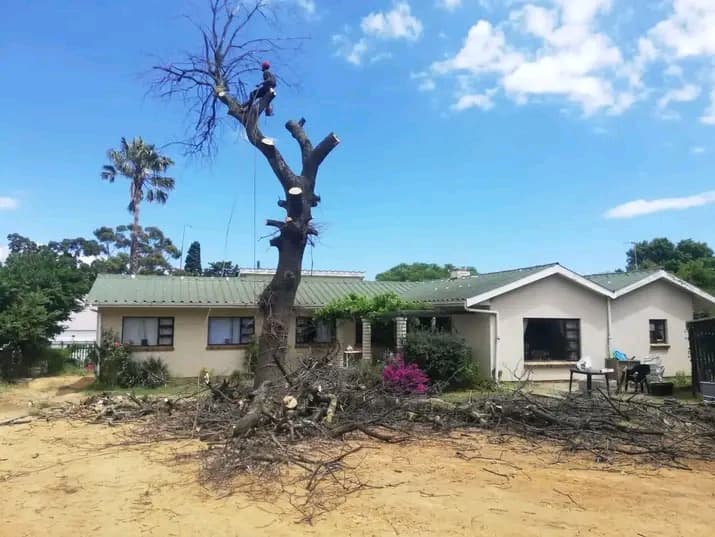
Look for a trunk lean that’s new or worsening, soil heaving at the base, fungal growth or soft/hollow bark on the trunk, large sections of dead branches through the canopy, vertical cracks in the trunk, and root heaving near paving or walls. Two things that don’t automatically mean a tree is dying: heat-stress leaf drop and a handful of small dead twigs at the branch tips. None of these confirm removal on their own — a professional assessment settles it either way.
Not every tree that looks a bit rough is in trouble, and not every tree that looks fine is safe. In Port Elizabeth, where southeaster winds put real load on mature trees every year, the difference between “keep an eye on it” and “get this assessed now” usually comes down to a handful of specific signs — not a gut feeling.
Here’s what actually matters, what doesn’t, and what to do if you spot the real thing.
Short on time? Send a photo of your tree on WhatsApp and get an honest read from the team directly — no need to finish the article first.
Send a Photo1A trunk that’s leaning more than it used to
A tree with a natural, lifelong lean isn’t automatically a problem — plenty of established trees along the Baakens River Valley suburbs have grown at an angle for decades without issue. What matters is change. If a tree has started leaning that wasn’t leaning before, or the lean has visibly worsened after a storm, that’s worth taking seriously.
The same goes for the ground around the base. Soil that’s lifting, cracking, or heaving on one side of the trunk usually means the root plate is shifting — a sign the tree may no longer be as anchored as it looks from a distance.
2Fungal growth at the base or on the trunk
Mushrooms, brackets, or conks growing at the base of a tree, or along the lower trunk, are one of the more reliable indicators of internal decay. Fungi feed on dead or dying wood, so their presence usually means something’s happening beneath the bark that you can’t see from the outside.
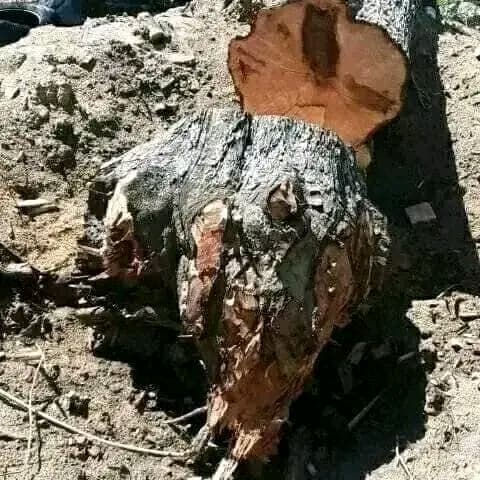
It doesn’t automatically mean the tree needs to come down — the extent of the decay matters, and that’s not something to guess at from ground level.
A related sign worth checking for: bark that feels soft or spongy when pressed, or a trunk that sounds hollow when tapped rather than solid. Both often point to the same internal decay as visible fungal growth, just earlier in the process, before anything is fruiting on the outside.
Spotted fungal growth or soft bark on your tree? Internal decay isn’t something to gauge from ground level — a proper decay check settles it.
Get a Decay Check3Significant deadwood through the canopy
A few dead twigs at the tips of branches is normal, especially after a dry Eastern Cape summer. Large sections of bare, brittle branches through the main canopy — particularly on bluegums and Port Jacksons common on tighter suburban stands in Newton Park and Charlo — is a different story. Widespread dieback through the crown often signals the tree is struggling with something more serious than seasonal stress.
4Vertical cracks or splits in the trunk
A crack running vertically along the trunk, or a split where a major limb meets the main stem, points to a structural weak point. These can develop after storm loading, and they don’t heal the way a scrape or a pruning cut does — the tree either compensates around it over years, or the weak point gives way under the next big gust.
A visible crack or split is one of the clearer “get this looked at soon” signs — especially on a tree near a house, driveway, or boundary wall.
Book an On-Site Assessment5Roots lifting paving, walls, or foundations
Root damage to paving, boundary walls, or driveways is common in older suburbs with mature street trees, and it’s not always a sign the tree itself is unhealthy. But visible heaving near a structure does mean the root system has outgrown the space it’s in, and that’s worth having it assessed by a tree professional — both for the tree’s stability and for the damage that keeps getting worse if it’s left alone.
When it’s stress, not death
Heat and drought stress. A tree that drops more leaves than usual during a hot, dry stretch, or shows some yellowing on the sun-exposed side, is often just conserving water. It’s a stress response, not a death sentence, and most established trees recover once conditions ease.
Minor, scattered branch dieback. A handful of small dead branches at the outer edges of the canopy is a normal part of how trees shed unproductive growth. It only becomes a concern when it’s widespread through the main structure rather than isolated at the tips — see the deadwood section above.
Neither of these needs urgent action on its own. If you’re not sure which category your tree falls into, that’s a reasonable thing to ask a professional rather than decide alone.
What to do if you’ve spotted the real thing
None of these signs, on their own, tell you for certain that a tree has to come down — that call depends on the species, the extent of the issue, and what’s nearby if it did fail. What they do tell you is that guessing isn’t a great plan, especially for a tree near a house, a driveway, or a boundary wall.
If your tree is showing two or more of the signs above, it’s worth getting a second opinion from someone who assesses this for a living rather than waiting to see what happens.
Get a free tree assessment in Port Elizabeth →Michael’s Tree Felling will look at the tree, tell you honestly whether it needs to come down, be pruned back, or simply monitored, and quote accordingly if removal is the right call.
 Text For Same Day Quote