
 Michael’s Tree Felling
Brown or Drooping Palm Fronds in Port Elizabeth? Coastal Causes vs. When to Call a Professional
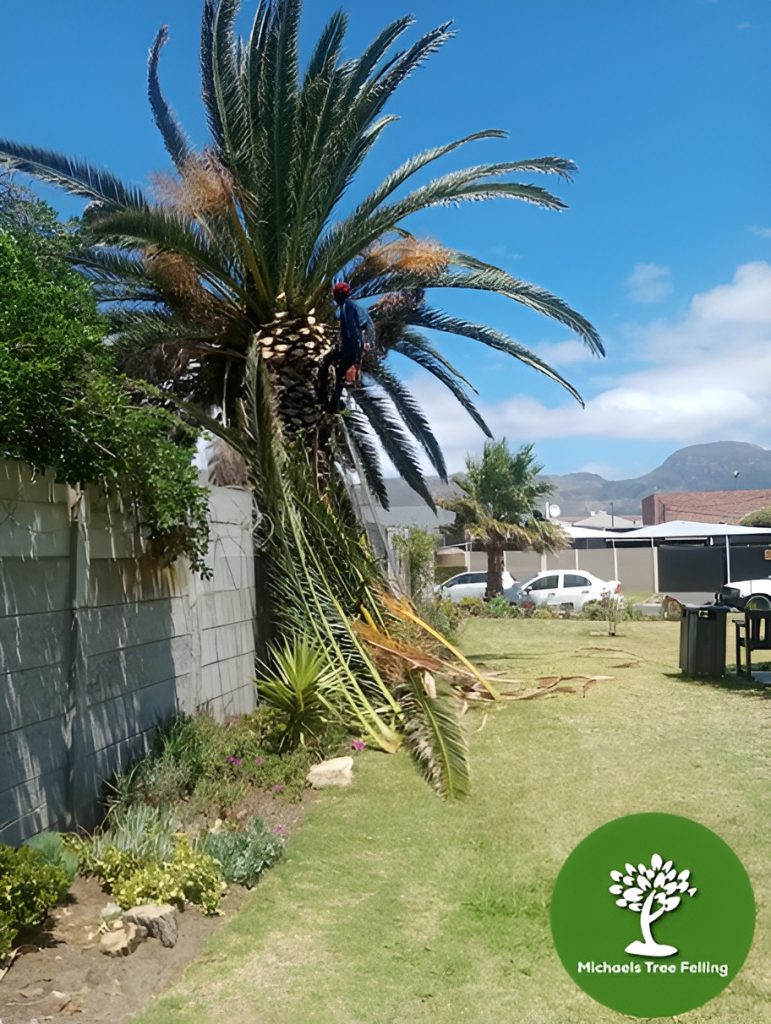
It depends on which fronds are affected. Palms constantly shed their oldest, lowest growth — that’s normal, not a health problem. What’s worth a closer look is browning spreading into the mid or upper crown, new fronds emerging discoloured, salt/wind scorch on coastal palms, or signs of nutrient deficiency or pest damage. Most cases along the Port Elizabeth coast come down to normal turnover or salt stress, but a proper trim and inspection settles it either way.
If you’ve noticed brown, yellowing, or drooping fronds on your palm and you’re not sure whether that’s normal or a problem, the short answer is: it depends on which fronds, and how much of the crown is affected. Palms shed their oldest growth constantly — that’s not decline, it’s how they work. What’s worth a second look is browning that’s spreading upward through the crown, showing up on new growth, or coming with anything beyond just discoloured leaves.
Here’s how to tell the difference, what’s actually behind it along Port Elizabeth’s coast, and when it’s worth having someone look at it in person.
Not sure if your palm’s fronds are normal die-off or something more? Send a photo on WhatsApp and get an honest read from the team.
Ask About Your PalmNormal frond die-off vs. a real problem
Every palm constantly retires its oldest fronds. The lowest, oldest layer of the crown yellows, browns, and eventually droops before the palm sheds it or it needs to be cut away — that’s routine turnover, not a health issue. Phoenix and Washingtonia palms, the two species that dominate Port Elizabeth’s coastal suburbs, go through this cycle year-round, and a skirt of dead lower fronds is one of the most common (and least concerning) things homeowners call about.
What’s different: browning that’s working its way into the mid-crown or upper fronds, new spear leaves emerging already discoloured, or the whole canopy thinning out rather than just the bottom layer shedding on schedule. That pattern points to something actually affecting the palm’s health, not just normal housekeeping.
Salt and wind stress on coastal palms
Summerstrand and Humewood palms carry a specific coastal burden that inland trees don’t: constant salt spray and wind exposure. Salt-laden air settles on the fronds and can scorch the tips and edges, especially on the side of the palm facing the ocean or exposed to the prevailing wind. The result usually looks like browning concentrated at the frond tips and margins, often worse on one side of the crown than the other — a fairly reliable sign it’s environmental rather than a health problem with the palm itself.
This kind of stress is common enough along the beachfront that it’s often the first thing to rule out before assuming something’s actually wrong with the palm. It’s rarely urgent, but a palm carrying a lot of salt-scorched growth benefits from having the worst of it trimmed away, both for appearance and to reduce the dead material a strong southeaster can turn into a falling hazard.
Nutrient deficiency signs
Palms are prone to a handful of nutrient deficiencies that show up as patterned discolouration rather than uniform browning. The most common is a potassium shortage, which typically shows as yellow-to-orange spotting on the older fronds first, sometimes with the leaf tips looking frizzled or scorched, while the newest growth stays green. A magnesium shortage shows differently — a yellow band along the outer edge of the frond with a green center stripe down the middle.
These patterns are useful for narrowing things down, but confirming an actual nutrient deficiency (and the right correction) is genuinely something to have assessed rather than guessed at — over-correcting with the wrong feeding programme can do more harm than the original deficiency.
Pest or disease signs
Most frond discolouration on Port Elizabeth palms comes down to normal turnover or coastal stress, but a few signs point toward something that needs a closer look: rapid collapse or wilting across the whole crown rather than gradual browning, a foul smell coming from the crown or trunk, visible holes or tunnelling in the trunk, or fronds that snap and drop unexpectedly rather than dying back gradually. None of these confirm a specific pest or disease on their own — that’s not something to diagnose from a photo or a quick look — but any of them is a reasonable trigger to get the palm looked at properly rather than waiting to see if it gets worse.
Why DIY frond-pulling is risky
Pulling or cutting fronds yourself is one of the more commonly underestimated jobs around the house. Dead fronds on a mature Phoenix or Washingtonia are heavy, and the base of the leaf stalk on both species carries sharp, rigid spines or seed stalks that cause real injuries — the kind of hazard Michael’s flags on every palm job, not just a theoretical warning. Add in the height most Port Elizabeth palms reach, often well above carports, boundary walls, and power lines, and a DIY frond-pull turns into a fall-risk and electrical-hazard job very quickly, not just an awkward gardening chore.
Professional crews work this safely with the right rigging and technique precisely because the combination of height, weight, and sharp material is exactly what makes it dangerous to improvise.
When to schedule a trim
A palm carrying a heavy skirt of dead fronds, visible salt-scorch, or fronds that have started dropping on their own is due for a trim — waiting doesn’t make it safer, and dead material only adds weight and hazard the longer it stays up. If you’re also seeing any of the deficiency or pest/disease signs above, that’s worth combining with a proper assessment rather than treating it as a routine tidy-up.
Michael’s Tree Felling handles professional palm tree trimming in Port Elizabeth on Phoenix and Washingtonia palms across Summerstrand, Humewood, and the rest of Nelson Mandela Bay’s coastal suburbs — including the elevated work above carports and power lines that makes this one to leave to a professional crew.
 Text For Same Day Quote