 Michael’s Tree Felling
Port Jackson and Rooikrans on Your Property? What Newton Park & Charlo Residents Need to Know
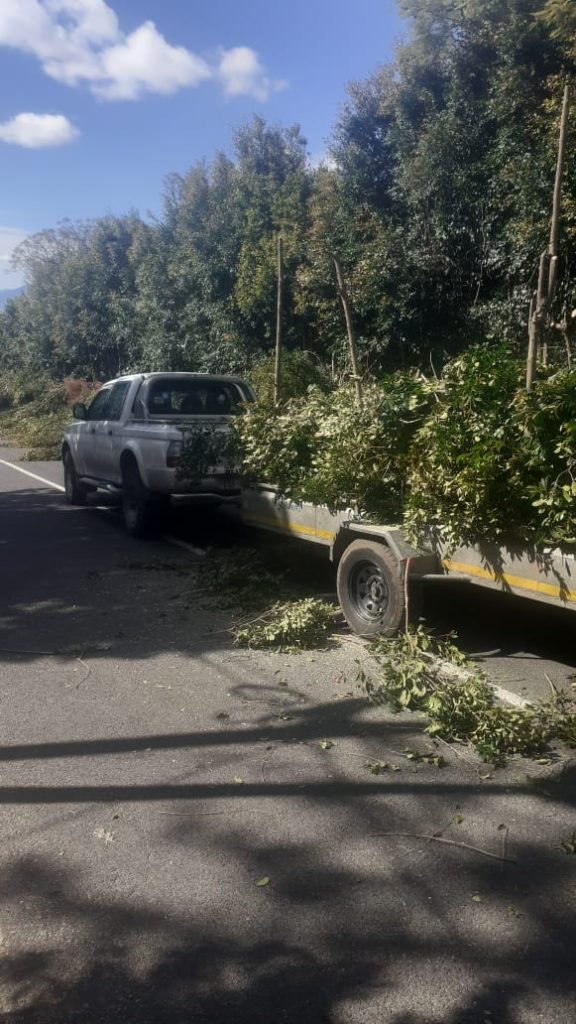
Port Jackson willow and rooikrans are fast-growing, water-hungry invasive species that NMBM actively encourages Newton Park and Charlo residents to remove — they raise fire risk and crowd out indigenous vegetation. Port Jackson has sickle-shaped blue-green phyllodes and yellow ball flowers; rooikrans has rounder phyllodes and reddish, coiled seed pods with black seeds. Established stands need a systematic professional felling process, and proper stump/debris handling to stop regrowth — if you’re unsure which species you’re looking at, get it confirmed before deciding what to do.
If you’ve got dense, scrubby trees with yellow puffball flowers or twisted seed pods taking over a section of your property in Newton Park or Charlo, there’s a good chance you’re looking at Port Jackson willow or rooikrans — two of the most common invasive species in these suburbs, and two that Nelson Mandela Bay Metropolitan Municipality actively wants cleared rather than left to spread. Both are Category 1b listed invasives under national law (NEMBA), so owners are expected to control them. Our guide to invasive trees and the NEMBA categories explains what that means.
Here’s why these species get singled out, how to tell them apart from indigenous trees you’d want to keep, and what proper removal actually involves.
Not sure if what’s growing on your property is Port Jackson, rooikrans, or something worth keeping? Send a photo on WhatsApp and get an honest read from the team.
Ask About Your TreesWhy these species are targeted
Port Jackson willow and rooikrans aren’t targeted because they’re unattractive or inconvenient — they’re targeted because of what they do to the land around them. Both are fast-growing, water-hungry, and form dense, single-species thickets that crowd out indigenous vegetation rather than growing alongside it. That density also means a lot of standing dry material, which turns a stand of these trees into a real fire-risk multiplier during the dry season — exactly the kind of fuel load that lets a small fire become a fast-moving one on a windy Eastern Cape day.
Newton Park and Charlo have significant populations of both species, which is part of why NMBM runs active removal programmes specifically targeting them in these areas rather than leaving it to individual homeowners to decide whether it’s worth the effort.
How to identify them vs. similar-looking indigenous trees
Port Jackson willow (Acacia saligna) has sickle-shaped, blue-green leaf-like growths (technically phyllodes, not true leaves) and clusters of bright yellow, ball-shaped flowers in late winter and spring. Rooikrans (Acacia cyclops) has rounder, more oval phyllodes and a distinctive giveaway once it’s seeded: tightly coiled, reddish-brown seed pods with black seeds wrapped in a bright red-orange band.
Both can superficially resemble some indigenous acacias and other scrubby coastal vegetation to an untrained eye, which is exactly why misidentifying a tree in either direction is a real risk — removing an indigenous tree by mistake, or leaving an invasive stand because it “looked like it belonged,” both happen. If you’re not confident which one you’re looking at, that’s worth confirming with someone who deals with local vegetation regularly rather than guessing from a phone photo.
NMBM’s stance and what to expect
NMBM treats Port Jackson and rooikrans removal as something the municipality actively encourages residents to act on, not a neutral, take-it-or-leave-it choice — clearing established stands reduces fire risk and takes pressure off the indigenous vegetation these species outcompete. Whether a specific incentive, subsidy, or requirement applies to your particular property is worth checking with the municipality directly rather than assuming either way, since programmes and requirements can change and vary by area.
What’s consistent regardless of the specifics: this is a removal NMBM wants to see happen, which makes it a lower-friction job to get approved and underway than some other tree work on a property.
Safe removal process for established stands
Established Port Jackson or rooikrans stands are usually multiple trees growing close together, often with a dense, tangled understory beneath them — genuinely different from felling a single specimen tree, and not a job to underestimate. Dense, multi-stemmed growth means more cutting, more debris, and a higher chance of trees leaning on each other in ways that make felling order matter. A professional crew works through a stand systematically, felling in a controlled sequence rather than cutting indiscriminately, so nothing comes down unexpectedly onto a neighbouring tree, a fence, or a person still working nearby.
Disposal and follow-up regrowth control
Removal isn’t the end of the job with these species the way it often is with a single ornamental tree. Both Port Jackson and rooikrans regrow vigorously from cut stumps and can also reseed from soil-stored seed that’s been sitting dormant for years, so a cleared area can look sorted and still send up new growth months later if the stumps and seed bank aren’t dealt with properly. Proper disposal — hauling debris away rather than leaving cut material to reseed the same spot — and a plan for follow-up regrowth checks matter as much as the initial felling.
Michael’s Tree Felling handles invasive tree removal in Port Elizabeth for Newton Park, Charlo, and other Port Jackson and rooikrans-affected suburbs, with proper debris hauling and eco-friendly disposal included rather than treated as an afterthought.
 Text For Same Day Quote